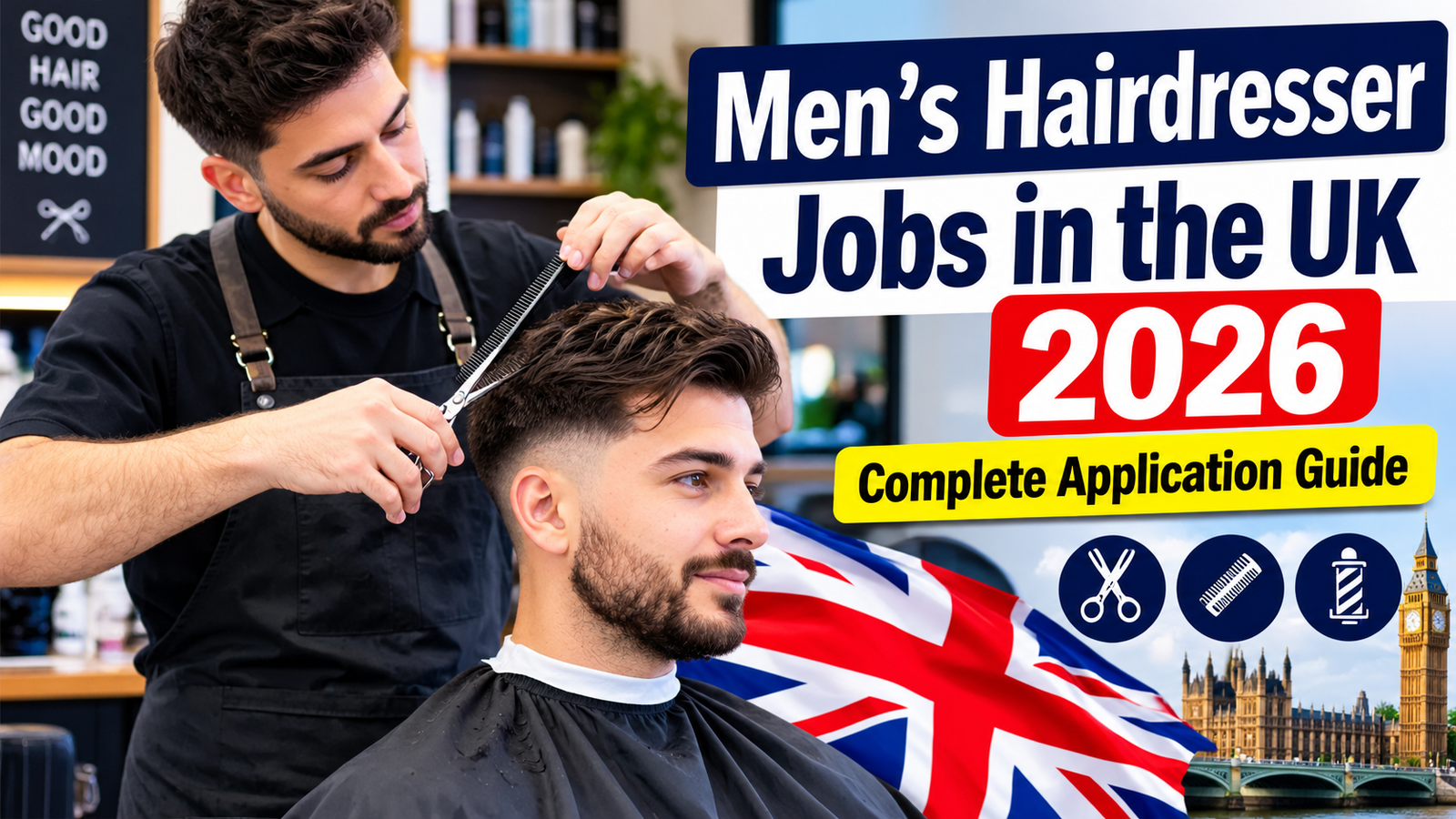
Men’s hairdressing is a practical career for people who enjoy working with customers and creating different hairstyles. Across the United Kingdom, barbershops and men’s grooming salons provide services such as haircuts, fades, beard trimming, styling and personal grooming. For experienced hairdressers living outside the UK, these businesses may be worth exploring when the researching international job opportunities.
However, finding a vacancy is only one part of the process. Applicants from other countries must also understand the UK’s work permission requirements before planning a move. A job advertisement does not automatically mean that an employer can sponsor a foreign worker or the that the position qualifies for a work visa.
This complete guide explains men’s hairdresser jobs in the UK in 2026, the skills employers may look for, how to prepare an application, where to search for genuine vacancies and the what international applicants need to understand about legal employment.
Understanding Men’s Hairdresser Jobs in the UK
Men’s hairdressers and barbers provide haircare services based on the customers preferences. Their work may include traditional haircuts, modern fades, scissor cutting, beard shaping, hair washing and styling. Some professionals also advise customers about suitable hairstyles and grooming routines.
The type of work depends on the business. A traditional barbershop may concentrate on classic cuts and beard grooming while the modern men’s salon may offer more specialised styling services. Some businesses serve regular local customers whereas others operate as part of the larger chain.
Employers generally want staff who can perform the required services confidently, maintain a clean working area and communicate professionally with customers. Previous experience can be the useful because it allows applicants to demonstrate that they understand the practical requirements of the role.
For international applicants the first step is to the understand the difference between being qualified for a job and being legally permitted to work in the UK. Both matter, but they are separate requirements.
Can Foreign Hairdressers Get Visa Sponsorship in the UK?
This is one of the most important issues for anyone applying from outside the United Kingdom.
According to the UK government’s published Skilled Worker occupation list, occupation code 6221 covers hairdressers and barbers, and these occupations are classified as ineligible for the standard Skilled Worker visa route. Consequently, an ordinary men’s hairdresser or barber vacancy should not be presented as a straightforward Skilled Worker sponsorship opportunity.
This does not mean that a person who is already legally allowed to work in the UK cannot apply for a hairdressing job. Someone with suitable existing immigration permission may be able to work in a barbershop, subject to the conditions of their status.
For example, certain people who hold qualifying family immigration permission may have the right to work. Other immigration categories have their own conditions and the restrictions. Applicants must check their individual circumstances rather than the assuming that every visa provides unrestricted employment rights.
It is also important to understand that an employer’s willingness to hire a foreign applicant does not the override immigration rules. A genuine job offer cannot make an otherwise ineligible occupation eligible for a visa.
Anyone researching men’s hairdresser jobs should therefore investigate their legal right to work before paying recruitment fees, making travel arrangements or leaving an existing job.
Skills Required for Men’s Hairdresser Jobs
Practical ability is one of the most important parts of a hairdresser’s application. Employers may look for experience with different cutting techniques and the ability to understand what customers want.
An experienced applicant may have worked with skin fades, taper fades, scissor cuts, textured styles, beard trimming and traditional men’s haircuts. Being able to explain these skills clearly helps an employer understand the type of work the applicant can perform.
Customer service is also important. Hairdressers need to listen carefully and discuss style preferences and respond professionally when customers request adjustments. Clear communication can be help prevent misunderstandings and the build customer confidence.
Cleanliness and safe working practices matter as well. Applicants should understand how to the maintain tools clean the equipment and keep their workstation organised. These habits demonstrate professionalism and the help create a comfortable environment for a customers.
Formal training may support an application, particularly when it demonstrates relevant technical knowledge. However applicants should never claim qualifications they do not have. Accurate information about training and experience is more useful than the exaggerated claims.
Experience and Qualifications Employers May Expect
Requirements vary between employers. Some businesses may consider applicants with strong practical experience, while others may prefer candidates who have the completed recognised barbering or hairdressing training.
If you have worked is a barbershop grooming salon or haircare business, describe your responsibilities clearly. Explain the services you provided the cutting techniques you used and the type of customers you served.
Candidates with limited experience can improve their applications by completing relevant training and gaining supervised practical experience. Developing a portfolio can also help demonstrate progress and technical ability.
A portfolio does not need to be complicated. A carefully selected collection of photographs showing different hairstyles and cuts can help an employer understand your work. Make sure you have permission to use any photographs that show identifiable customers.
Your CV should reflect your real experience and capabilities. Avoid copying another person’s CV or using generic claims that you cannot support during an interview.
Also read:IELTS 2026: Smart Strategies to Improve Your Band Score
How to Prepare a Strong Hairdresser CV
A well-organised CV makes it easier for employers to the understand your background. Start with a short professional introduction explaining your experience in the men hairdressing and the services you can provide.
Your employment history should describe previous positions, workplaces and relevant responsibilities. Rather than simply stating that you worked as a barber explain the types of the haircuts you performed how you the handled customer requests and the how you maintained hygiene standards.
Include relevant training and the certificates where applicable. If you speak more than one language you can mention that too, especially if it helps you communicate with the different customers.
Keep the document accurate and easy to read. Use clear headings, consistent formatting and professional contact details. There is no need to add unrelated personal information that does not help demonstrate your suitability for the position.
If you are applying from abroad be honest about the your current location and work permission. Employers need accurate the information to assess whether they can lawfully employ you.
Where to Search for Genuine UK Hairdresser Vacancies
Applicants can research vacancies through established job websites and employers own career pages and the professional networking platforms. Searching directly for barbershops and the men grooming salons can also help identify businesses that are accepting applications.
Useful search phrases include “men’s hairdresser”, “barber”, “men’s stylist” and “barbershop assistant”. These terms can help you explore the job market, although the duties and the experience requirements will vary.
Read each advertisement carefully. Check what services the employer expects you to provide, whether previous experience is the necessary and how applications should be submitted.
You should also verify the business independently. Look for consistent company details a genuine business presence and a clear description of the position. If a recruiter claims to the offer immigration sponsorship, check the exact visa route and the relevant official requirements instead of the relying only on their statements.
Remember that a vacancy being genuine does not automatically make it suitable for a person who needs a new UK work visa. Job suitability and immigration eligibility must be checked separately.

Legal Work Options for Applicants Already in the UK
Some people searching for men’s hairdresser jobs may already live in the UK under an immigration category that allows employment. Depending on their individual conditions, they may be able to apply for suitable hairdressing vacancies without requiring the employer to sponsor a Skilled Worker visa.
Before accepting a position, applicants should confirm that their permission allows the proposed work and that they comply with any restrictions. Employers are required to check that workers have the right to work in the UK. The government’s official guidance explains the checks employers can use to establish this.
If your permission is limited or you are uncertain about your conditions, check the official information connected with your immigration status before starting work.
Do not assume that being physically present in the UK means you can work. Likewise, entering as a visitor does not normally provide permission to take an ordinary job. You must have the appropriate legal right to work before beginning employment.
Information for Married Couples Planning to Move to the UK
Married couples considering a move to the UK should assess their circumstances together. One partner may have professional qualifications or a possible immigration route that is different from the other partner’s options.
A spouse or partner visa may be relevant when one partner meets the applicable sponsor requirements. The couple must also satisfy the relevant relationship, financial, English-language and other conditions for the specific route.
Being legally married does not automatically qualify both partners to move to the UK. The sponsor status and the requirements of the visa category are important.
Some immigration routes allow qualifying dependants to accompany the main applicant while the others impose restrictions. Couples should confirm the dependant rules for the exact route they are considering rather than assuming that every work visa allows a spouse to join.
If one partner has experience in a different occupation, it may be useful to investigate whether that occupation has a valid immigration pathway. However, the eligibility of any alternative job must be checked against the actual duties and the relevant official rules.
The best approach is to make a joint plan based on verified information realistic employment options and the legal requirements that apply to the both partners.
How to Prepare for a Hairdresser Job Interview
An interview is an opportunity to explain your practical skills and demonstrate how you approach customer service. Before the interview learn about the business and review the responsibilities listed in the vacancy.
Be prepared to discuss the types of haircuts you can perform your previous work experience and how you can respond to different customer requests. Employers may also ask how you maintain cleanliness, organise your tools and handle a customer who is unhappy with a result.
Where possible, prepare examples from your actual work. A portfolio can support your answers by showing the styles you have created. Never use photographs of another hairdresser’s work as if they were your own.
If you are applying from outside the UK, answer questions about your location and work permission honestly. Do not claim that the you have a visa or sponsorship eligibility unless that is true.
A professional attitude, clear communication and accurate information can help employers assess your application fairly.
Avoid Fake Recruitment and Sponsorship Offers
People searching for jobs abroad can encounter advertisements that promise guaranteed employment, easy visas or the sponsorship for any occupation. These claims should be treated cautiously.
Be particularly careful if someone asks for the large upfront payment while promising that a normal barber vacancy will guarantee a UK visa. Since hairdressers and barbers are classified as ineligible for the standard Skilled Worker route, a recruiter should not present an ordinary barber position as a straightforward route through that visa category.
Verify the employer and recruitment agency independently. Ask for a clear description of the role and understand exactly what any fee covers before paying for a legitimate service.
Do not submit fake certificates, false employment references or altered documents. Misrepresentation can damage your employment prospects and create immigration difficulties.
If a recruiter claims that a different job title automatically solves the eligibility problem, check the actual duties and applicable occupation rules. A title alone does not determine whether a position qualifies for a visa.

A Practical Application Plan for 2026
Start by reviewing your experience, training and portfolio. Prepare a CV that accurately describes your hairdressing skills and identifies the type of work you are looking for.
Next, research genuine employers and suitable vacancies. Read the requirements carefully and submit applications that match your experience instead of sending the same generic message to every business.
At the same time, establish whether you already have a legal route to work in the UK or whether another immigration category may be relevant to your circumstances. Check official government guidance before making decisions.
If you are planning to move with your spouse, assess both partners’ eligibility and the rules for accompanying family members. Do not make relocation plans based only on an informal job offer or a recruiter’s promise.
Keep copies of your applications, employment correspondence and relevant qualifications. Before accepting an offer, ensure that the job details and your right to work have been properly established.
Final Thoughts
Men’s hairdresser jobs in the UK may interest experienced professionals who want to use their grooming skills in a new working environment. Strong technical ability, a clear CV, a genuine portfolio and professional communication can all support a job application.
However, international applicants must understand the immigration position before planning a move. The UK government’s published occupation list classifies hairdressers and barbers as ineligible for the standard Skilled Worker visa route. This means ordinary hairdresser vacancies should not be promoted as guaranteed sponsorship opportunities.
The most responsible approach is to research genuine vacancies, verify the employer, establish your legal right to work and investigate only immigration routes that genuinely fit your circumstances. Married couples should check both partners’ options and any applicable dependant conditions before making commitments.
Careful preparation can help applicants avoid misleading offers and make better-informed decisions about their careers and future plans in the United Kingdom.
1 thought on “Men’s Hairdresser Jobs in the UK 2026: Complete Application Guide”